
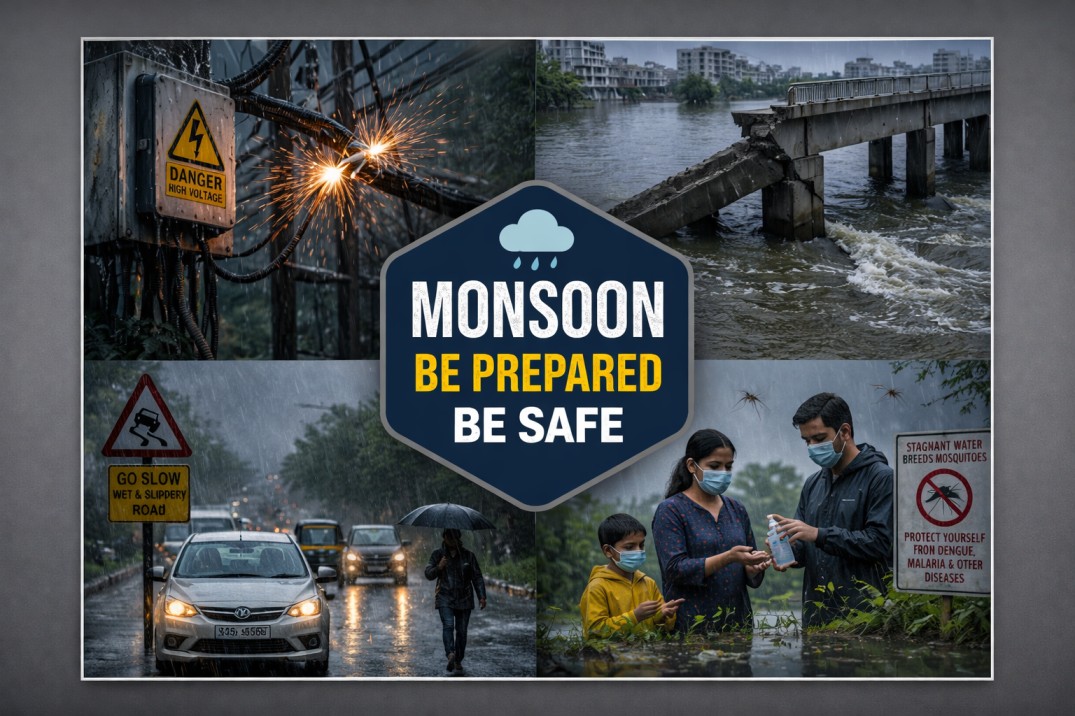
The monsoon season is a paradox. It brings much-needed relief from the summer heat, yet it also unleashes a wave of risks. Torrential rains, flooding, and high humidity can disrupt daily life, damage infrastructure, and compromise safety. From electrical hazards to road accidents and public health concerns, the season tests the resilience of our systems. This is where standards act as silent protectors, ensuring preparedness across industries and communities.
Electrical Safety in the Rains
Water and electricity are a dangerous mix. Short circuits, electrocution, and equipment failures are common during monsoon flooding. Standards like IEC 60364 (Low-Voltage Electrical Installations) and IEC 60529 (IP Code for Protection Against Water Ingress) ensure safe wiring, grounding, and enclosures. Complementing these, IPC standards for electrical assemblies, NEMA standards for enclosures and equipment, and UL standards for electrical safety and product certification strengthen resilience against moisture and water ingress.
Public Health & Indoor Safety
Monsoon humidity fosters mold, dampness, and infection risks. Standards like ASHRAE 62.1 (Ventilation for Acceptable Indoor Air Quality) and ISO 14644 (Cleanrooms & Controlled Environments) help homes, hospitals, schools, and offices maintain safe indoor environments. ISO 15189 (Medical Laboratories) ensures diagnostic accuracy during seasonal outbreaks of waterborne and vector-borne diseases. These standards protect communities from hidden health threats when seasonal illnesses peak.
Transport & Road Safety
Flooded roads, reduced visibility, and slippery surfaces make commuting hazardous. Vehicle safety standards from AIAG and SAE ensure brakes, tires, and electronics perform reliably under wet conditions. BSI’s road traffic safety frameworks strengthen accident prevention, while CSA standards support vehicle performance in adverse weather. JSA standards reinforce automotive reliability and transport system safety during seasonal challenges. Together, these standards help minimize risks and keep travel safer in the monsoon.
Infrastructure & Building Resilience
Heavy rains test the strength of our buildings, bridges, and drainage systems. While ISO 14001 (Environmental Management Systems) supports sustainable drainage and flood-resilient planning, ISO 22301 (Business Continuity Management Systems) helps organizations prepare for disruptions, ensuring critical services remain operational.
In addition, FIB standards for concrete and structural engineering and ACI and ASTM standards for construction materials and testing provide global best practices for bridges, roads, and large infrastructure exposed to monsoon stresses.
Water Supply & Pumping Systems
Reliable water supply and drainage are critical during monsoon flooding. AWWA standards ensure safe and resilient water distribution systems, while HI standards provide guidance for pumps and pumping systems that manage excess water and prevent urban flooding.
The monsoon reminds us of nature’s power, but also of our ability to prepare. By adopting standards from the leading SDOs, industries and communities can transform vulnerabilities into resilience. These standards are not just technical documents, they are life-saving frameworks that keep our homes, workplaces, and cities safe when the rains arrive.
BSB Edge makes the global standards accessible and actionable. Explore our catalogue today and discover how standards can help you build resilience this monsoon.
Explore Standards with BSB Edge
Authored by Farrah Ahmad
Head – Content Management
BSB Edge Pvt. Ltd.


Leave a Reply