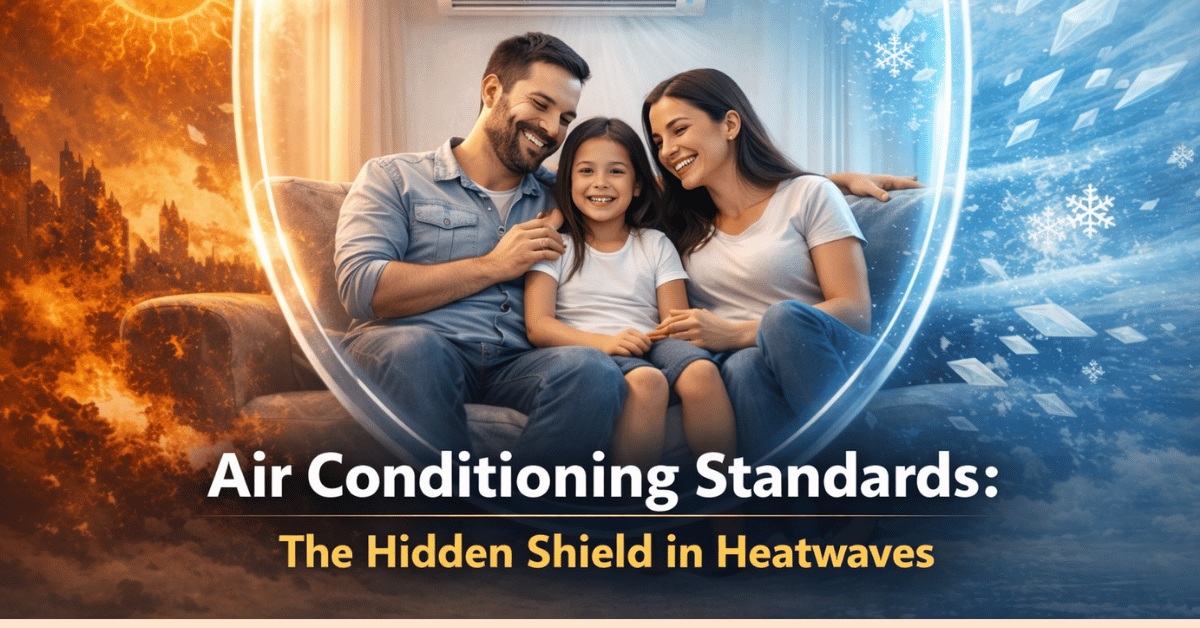
The recent heatwave tragedy in the capital city is a stark reminder that cooling is not a luxury—it is a lifeline. As temperatures soar past 45°C, air conditioning systems become critical to public health, workplace safety, and even survival. But not all cooling systems are created equal. The difference between efficient, safe air conditioning and poorly designed units often lies in one word: Standards.
Standards ensure that air conditioning systems deliver reliable cooling, maintain indoor air quality, and operate safely under extreme conditions. Without them, we risk equipment failures, unhealthy environments, and dangerous inefficiencies—issues that can turn deadly during a heat crisis.
Among the most influential voices in this space is ASHRAE (American Society of Heating, Refrigerating and Air-Conditioning Engineers). This week’s theme for ‘Air Quality Awareness Week’, announced by ASHRAE President Bill McQuade’s—“Healthy Buildings: Designing for Life”—underscores the importance of ventilation and filtration in every indoor space. It is a timely reminder that cooling is not just about temperature; it is about creating environments where people can breathe safely and thrive.
ASHRAE standards set benchmarks worldwide:
- ASHRAE Standard 55: Defines thermal comfort conditions for human occupancy.
- ASHRAE Standard 62.1: Establishes ventilation requirements for acceptable indoor air quality.
- ASHRAE Standard 90.1: Provides minimum energy efficiency requirements for buildings.
Together, these standards ensure that cooling systems don’t just fight heat; they protect health, conserve energy, and keep environments livable.
Other global Standards Development Organizations (SDOs) also publish critical standards in this space.
- ISO 16813: Principles of building environment design
- IEC 60335-2-40: Safety requirements for electrical heat pumps and air conditioners
- DIN EN 14511: Standards for Air Conditioners
- BS ISO/IEC 14543-4-301: Application protocols for home air conditioners and controllers
- CSA C368.1:14: Energy performance of room air conditioners
Each of these adds layers of protection, whether it is electrical safety, environmental responsibility, or energy efficiency.
As summers grow harsher, the importance of these standards cannot be overstated. They are not abstract technical documents. They are safeguards that directly impact lives.
In a world where climate extremes are becoming the norm, adherence to air conditioning standards is no longer optional—it is essential for resilience, safety, and survival.
Explore more at www.bsbedge.com
Authored by Farrah Ahmad
Head – Content Management
BSB Edge Pvt. Ltd.